

Everything You Need to Know About Interest Rates: Why and How Banks Set Them?
Understanding Interest Rates: Why Banks Apply Them.
In this article, we break down how interest rates work by explaining why banks apply them, how they are set, and what factors influence their variation. Through concrete examples and practical cases, we guide you step by step to calculate the real cost of a loan, analyzing year by year the distribution between principal and interest. An essential read to better understand your loans and make informed financial decisions.

gnabeli jean

Interest rates are a fundamental aspect of banking finance. They directly impact the cost of a loan and influence the decisions of both borrowers and investors. However, few people truly understand why banks apply interest rates, how they are set, and what key factors influence the cost of credit. In this article, we will explore these aspects in detail before learning how to calculate the real cost of a loan through a concrete example
Why Do Banks Apply Interest Rates?
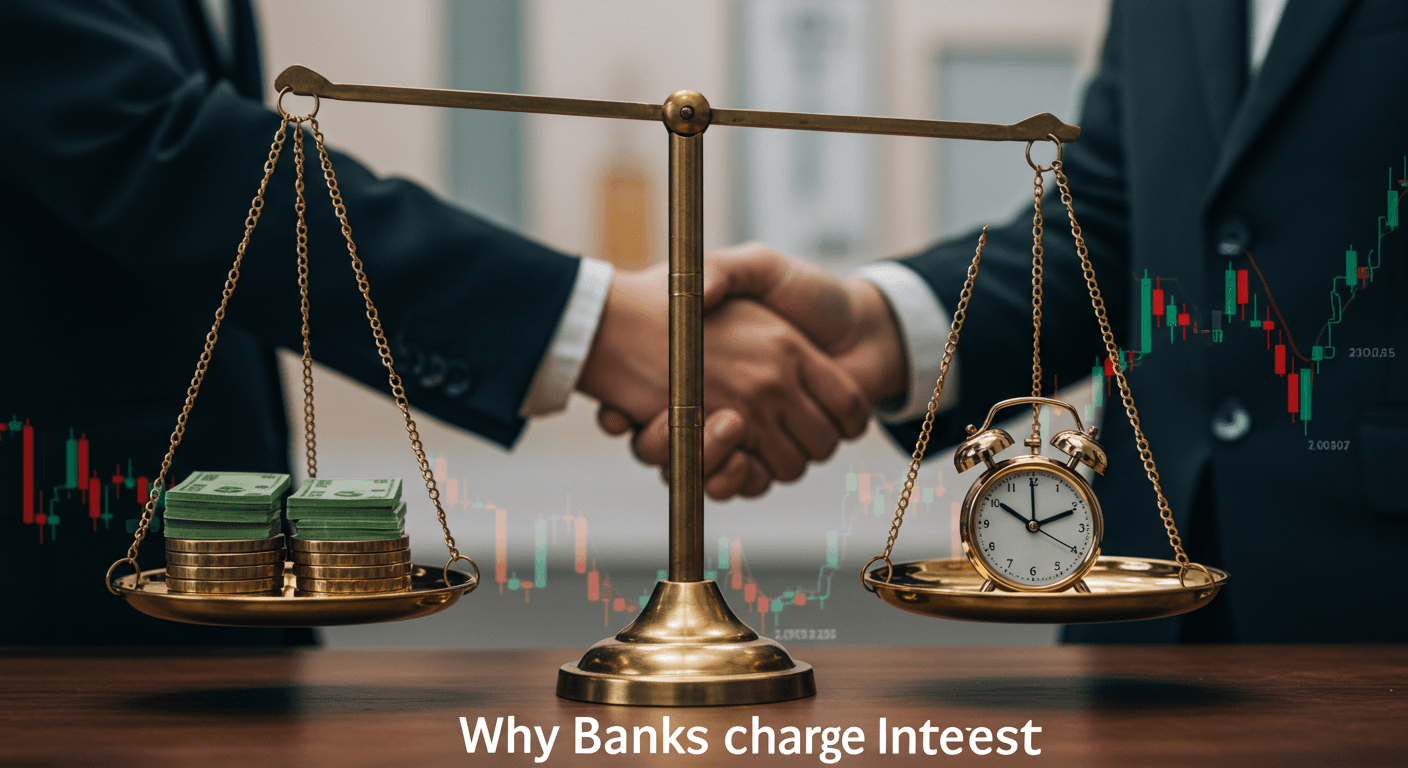
Banks apply interest rates for several essential reasons. From an economic perspective, the interest rate represents the lender's compensation. When a bank grants a loan, it immobilizes a sum of money that could have been invested elsewhere. By applying an interest rate, it receives compensation for this opportunity cost. This rate also serves to cover the risk that the borrower may not repay the loan. The higher the risk, the higher the interest rate to mitigate potential losses.
From a legal standpoint, interest rates are regulated to protect borrowers from abusive practices. Many countries impose a usury rate, which is the legal ceiling beyond which a bank cannot lend. This regulatory framework prevents excessive rates that could dangerously indebt borrowers.
How Do Banks Set Interest Rates?

The interest rate applied by a bank depends on several factors. First, monetary policy set by the central bank plays a key role. The central bank sets a benchmark interest rate, which directly influences the cost at which commercial banks themselves borrow money. If the central bank raises its benchmark rates, commercial banks will pass on this increase to their loans, making credit more expensive.
Next, the overall economic situation also impacts interest rates. During periods of high inflation, banks adjust their rates upward to curb economic overheating. Conversely, during a recession, they may lower rates to encourage investment and consumption.
Finally, interest rates vary according to the supply and demand for credit. If many individuals and businesses seek to borrow, banks may increase their rates to maximize profits. Conversely, if there is low demand for credit, they may lower rates to attract more borrowers.
Key Factors Determining the Cost of Credit

When a bank evaluates the interest rate to apply to a borrower, several criteria come into play. The borrower’s profile is one of the most determining factors. The higher the risk of default, the higher the interest rate. This risk is usually measured through a credit score, which reflects the borrower's financial history.
Next, the loan duration influences the rate. The longer a loan term, the greater the uncertainty for the bank, which may lead to a higher interest rate. Likewise, the loan amount and its purpose also play a role. For example, mortgage loans often have lower rates than consumer loans because real estate is considered a stable asset that can be used as collateral.
How to Calculate the Real Cost of a Loan?

To fully understand how much a loan actually costs, it is essential to break down the repayment year by year. Let’s take a concrete example: a €10,000 loan over 3 years, with an annual interest rate of 5%. The monthly payment for this loan is €299.71, meaning that each month, the borrower will pay this amount to the bank. However, the distribution between principal repayment and interest evolves over the years, as interest is calculated on the remaining loan balance.
First Year:
During the first 12 months, interest is calculated on the initial principal of €10,000. As a result, the total interest paid in the first year amounts to €428.04. Meanwhile, the borrower gradually repays the principal, with €3,168.46 paid over the year. At the end of the first year, the remaining loan balance is reduced, which impacts how interest is calculated for the following year.
Second Year:
With a lower remaining balance, annual interest decreases to €265.94 in the second year. On the other hand, the principal repayment increases to €3,330.57 over this period. By the end of the second year, the borrower has significantly reduced their debt, which further lowers the proportion of interest in the final year.
Third Year:
During the last year of the loan, the remaining balance is now much lower than the initial amount, which further reduces the interest to €95.54 for the year. The principal repayment, in turn, reaches €3,500.97, thereby completing the total loan repayment.
Total Cost of the Loan:
When adding up all the payments made over three years, the borrower will have paid a total of €10,789.52, of which €789.52 represents interest. This means that for borrowing €10,000, the borrower has paid nearly 8% in additional costs over three years due to interest.
Conclusion
This breakdown demonstrates why it is crucial to fully understand how loan repayments are structured before committing. Over time, the share of interest decreases while the portion of principal repaid increases. This is why it is often advantageous to repay a loan faster if possible, to minimize interest payments.
If you’re considering taking out a loan, always take the time to analyze your repayment capacity and evaluate the total cost before making a decision!